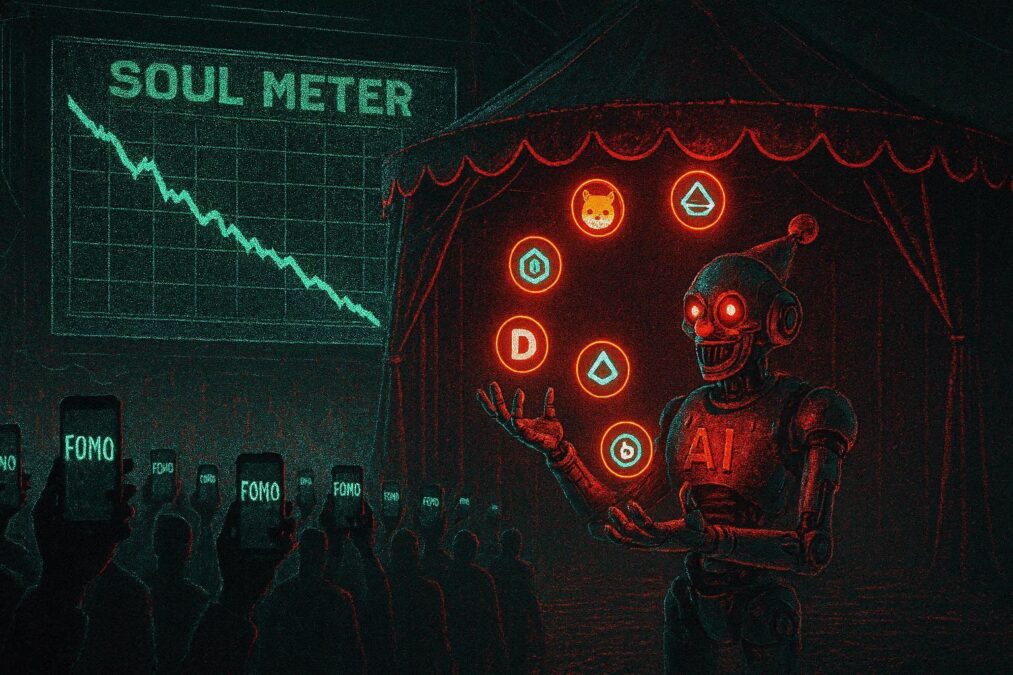
If Ethereum is the slow, reliable mainframe of the internet and Bitcoin is the digital vault, Solana is the Las Vegas Strip—built on high-speed fiber optics, fueled by adrenaline, and currently processing more “AI farts” per second than any other network in existence.
As we kick off May 2026, Solana (SOL) is sitting at roughly $84.20. It’s a fascinating price point; it’s high enough to keep the “Solana Summer” dream alive, but low enough that the bears are currently growling about a “head and shoulders” pattern on the weekly chart. While the rest of the market watches institutional ETF flows into BTC with the excitement of watching paint dry, the Solana ecosystem is a beehive of activity. They aren’t just building apps; they are hardening a high-speed engine designed to act as the “Internet-native capital market.”
Let’s step into the DeFi Lab and peel back the hood of this high-performance machine. Is Solana built to last as the foundation of global finance, or is it just a Ferrari with a loose lug nut?
1. The Firedancer and Alpenglow Era: Hardening the Network
For years, the loudest criticism of Solana was its “Pause” button. In the early days, the network would occasionally choke under the weight of its own success (or a particularly aggressive bot attack). In 2026, those jokes have mostly been retired. The network has matured through two massive technical milestones: Firedancer and the Alpenglow consensus rewrite.
The goal in 2026 isn’t just “higher TPS” (Transactions Per Second). The focus has shifted to Predictable Finality. Institutions don’t care if you can do a million transactions if they don’t know exactly when they are settled.
- Firedancer: This is the second, independent validator client developed by Jump Crypto. It is the most significant upgrade in the chain’s history. By having a second client written in C++, Solana has achieved “client diversity.” This prevents a single software bug in the original client from taking the entire chain down. It’s like having a backup engine on a jet; if one fails, you don’t fall out of the sky. In early 2026 testing, Firedancer demonstrated the ability to handle over 1 million TPS in a controlled environment.
- Alpenglow: This consensus upgrade is the “secret sauce” of 2026. It optimizes how nodes talk to each other, reducing transaction finality to sub-150 milliseconds. This is the “Gold Standard” for high-frequency trading and real-world asset (RWA) settlement. If you’re trading tokenized T-bills or stocks, you need that speed to prevent front-running.
- IBRL (Increase Bandwidth, Reduce Latency): This is the broader technical roadmap designed to make the network so fast that it rivals traditional stock exchanges like the NASDAQ.
2. The “Seeker” and the Mobile Pivot: Breaking the App Store Monopoly
While Apple and Google continue to tax the digital world with their 30% “App Store tax,” Solana is doubling down on its mobile hardware. Following the surprise success of the Saga phone, the Solana Seeker started shipping in late 2025 and has become the de facto choice for the 2026 on-chain power user.
The Seeker isn’t trying to be an iPhone killer; it’s a Seed Vault with a screen.
- TEEPIN Technology: The phone uses a specialized hardware architecture called “Trusted Execution Environment Platform Infrastructure Network” (TEEPIN). This creates a “secure island” on the phone that isolates your crypto transactions from the rest of the Android OS. Even if your phone is infected with malware, your private keys remain unreachable.
- The SKR Airdrop: In January 2026, Solana Mobile rewarded users with a massive SKR token airdrop, a native asset for the mobile ecosystem. For many, the value of the airdrops alone exceeded the $600 price tag of the phone.
- Sovereign Distribution: The Seeker’s “dApp Store” is a middleman-free zone. It allows developers to bypass traditional app stores, letting you trade on Jupiter, lend on Kamino, or launch a token on Pump.fun without a corporate giant taking a cut of every transaction.
3. The Memecoin Gateway: Pump.fun and the AI Agent Revolution
Let’s be honest: in 2026, Solana is the king of the “Degenerate Economy.” If you see a token named after a political gaffe, a cat with a hat, or a sentient chatbot, it’s likely running on Solana.
- Pump.fun Dominance: This platform has revolutionized (or ruined, depending on who you ask) token launches. The barrier to entry is now effectively zero. In April 2026, the platform hit a milestone of nearly 2,000 new token launches every hour.
- Agentic AI: This is the biggest trend of Q2 2026. We’ve moved past humans posting memes. Now, autonomous AI agents like those behind PIPPIN or FARTCOIN manage their own treasuries. They tweet, they argue with users, and they even “hire” human developers via bounties to build utilities for their tokens.
- PENGU’s Surge: As of late April, the Pudgy Penguins (PENGU) token has solidified its spot as a top-100 asset. By bridging the gap between digital memes and real-world plush toys sold in major retail stores, PENGU is proving that “community-driven” tokens can have actual brand equity.However, this creates a liquidity vacuum. When the market is flooded with “magic beans” every hour, the “exit liquidity” (that’s you) gets spread thinner and thinner. The house always wins, and on Solana, the “house” is often the MEV (Maximum Extractable Value) bots that front-run these tiny launches.
4. The SOL/ETH Stalemate and the Institutional Gap
The old “Ethereum Killer” narrative has finally evolved into a “Specialization” reality.
- Ethereum has won the “L1 as a Settlement Layer” war. It is the massive, slow, ultra-secure vault where institutions store their billions.
- Solana has won the “Execution Layer” war. It is the preferred layer for retail users who want to actually use their money—swapping, gaming, and social media—without paying $40 in gas fees for a $10 transaction.
But there is a catch. In 2026, Solana faces a structural headwind: The ETF Gap. While Bitcoin and Ethereum enjoy massive, predictable institutional inflows from their spot ETFs, the Solana ETF market is still in its infancy. Cumulative spot Solana ETF net inflows hit nearly $1.1 billion by April 2026, but the pace has slowed compared to the “Big Two.” Without a consistent institutional “cushion,” SOL remains much more volatile and sensitive to the whims of the retail speculative cycle.
The Red Flag Checklist: Solana Edition
Before you “ape” into the next 100x Solana moonshot you saw a chatbot mention, remember the Lab’s safety protocols:
- The “Ghost” Volume: Because fees are so low (less than $0.001), “wash trading” is rampant. Bots trade with themselves to fake activity and lure in real buyers. Don’t trust the “Trending” tab on DexScreener blindly.
- Airdrop Exit Pressure: Many Solana projects in 2026 rely on “points” systems to keep users. Once the actual airdrop happens, the “mercenary liquidity” almost always leaves, and the token price can crater by 80% in a single afternoon.
- The Infrastructure Trap: Just because Firedancer makes the network fast doesn’t mean the project you’re buying is good. High-speed garbage is still garbage.
The Bottom Line
Solana in 2026 is a masterclass in engineering for the edge. It’s fast, it’s cheap, and it’s where the “soul” of the current retail market lives. Whether it can transcend its reputation as a “casino chain” and become a true “institutional capital market” depends on the continued success of the Alpenglow roadmap and the mainstream adoption of the Seeker hardware.
For now, it’s the most exciting place in the world to put your assets to work—as long as you realize that the “trader” on the other side of your swap might just be an AI bot that doesn’t sleep, doesn’t eat, and definitely doesn’t care about your “generational wealth.”
Are you a “Solana Maxi” who thinks Layer 2s are just over-complicated bandaids, or are you just here because you’re tired of paying more for gas than for your actual tokens?