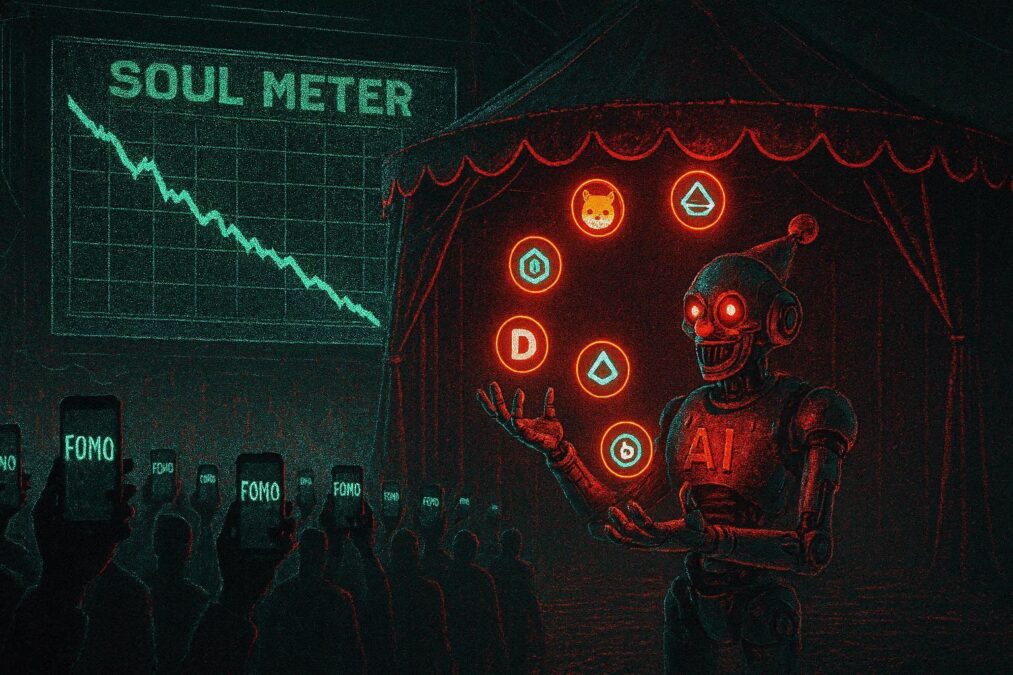

The mid-term cycle of 2026 was supposed to be defined by the “Institutional Absorption” phase, where the volatility of decentralized finance was finally dampened by the steady hands of TradFi capital. Instead, the final weeks of April have delivered a brutal reminder that the “World Computer” is only as secure as its weakest bridge. The rsETH theft—a surgical strike that drained approximately $292 million (116,500 rsETH) from the Kelp DAO ecosystem—has evolved into the most significant systemic risk event of the year.
What began as an isolated exploit on April 18, 2026, has mutated into a cross-protocol contagion, leaving the industry’s most trusted lending giant, Aave, trapped in an incredibly inconvenient and complicated bad debt scenario. This wasn’t just a smart contract “bug”; it was a masterclass in infrastructure poisoning, attributed by top security firms and Chainalysis to the North Korean Lazarus Group (specifically the sub-unit known as TraderTraitor). In the 2026 market, the “bitter” truth is that we aren’t just fighting code vulnerabilities; we are fighting state-sponsored adversaries who have learned to weaponize the very transparency of the blockchain.
1. Anatomy of an Invisible Heist: The rsETH Theft Mechanics
To truly understand the rsETH theft, we must look past the “hacker” headlines and into the technical guts of the exploit. Unlike the bridge hacks of 2022, this was not an attack on the smart contract logic of LayerZero or Kelp DAO. It was a sophisticated manipulation of “off-chain truth.”
The attackers exploited a “1-of-1” verifier configuration—a single point of failure that Kelp DAO had been warned about previously. By compromising two internal RPC (Remote Procedure Call) nodes hosted by LayerZero and simultaneously launching a massive DDoS (Distributed Denial of Service) attack against the remaining external nodes, the Lazarus Group created a digital “echo chamber.”
When the primary RPC nodes were knocked offline, the system’s verifier failed over to the compromised nodes. The attackers then fed a fraudulent cross-chain message to the system, claiming that 116,500 rsETH had been burned on a source chain (Unichain) and should be released on Ethereum. Because the verifier was only listening to the “poisoned” data sources, it approved the release. On-chain, the transaction looked perfectly legitimate. No signatures were forged; no math was broken. The system simply executed a perfect transaction based on a falsified view of reality. The “bitter” lesson here is that decentralization isn’t just about your contract; it’s about the entire data pipeline that feeds it.
2. The Aave Dilemma: When Stolen Tokens Become “Legal” Debt
While Kelp DAO is the victim of the theft, Aave is the victim of the aftermath. Immediately after the rsETH theft, the Lazarus Group acted with predatory speed. They didn’t just dump the 116,500 rsETH onto the open market—which would have crashed the price and alerted the world. Instead, they moved the stolen assets into Aave V3.
By depositing the “unbacked” rsETH as collateral, the attackers were able to borrow roughly $195 million in “hard” wrapped Ether (WETH) and stablecoins. They then funneled these legitimate funds through mixers like Tornado Cash, leaving Aave holding a massive pile of rsETH that effectively has no underlying value.
This has placed Aave in a “Complicated Situation.” According to recent disclosures from Aave service providers, the protocol is now facing two potential bad debt scenarios:
- Scenario A ($123.7 million loss): If the losses are deducted evenly from all circulating rsETH.
- Scenario B ($230.1 million loss): If the value of mainnet rsETH is guaranteed and the losses are concentrated on Layer 2 deployments.
This debt is concentrated primarily on the Ethereum mainnet, but proportionately, the Mantle and Arbitrum deployments are facing shortfalls of up to 71%. Aave founder Stani Kulechov has been quick to note that Aave’s own code was not compromised, but in a world of and hyper-connected DeFi, “your code” is only half the battle. If you accept toxic collateral, you inherit the toxicity of its origin.
3. The $8 Billion Exodus: Fear and Governance in April 2026
The market’s reaction to the rsETH theft has been swift and unforgiving. In the 48 hours following the disclosure, over $8 billion in Total Value Locked (TVL) exited Aave as lenders scrambled to pull their assets before the “Safety Module” could be triggered.
This is a classic “Bank Run” logic applied to a decentralized ledger. Investors realized that Aave’s primary insurance fund—designed to cover shortfalls—is valued between $80 million and $100 million. When the exposure to potential losses is north of $200 million, the math simply doesn’t add up for the lenders.
The Aave DAO is currently paralyzed by a governance debate. Aave service providers have proposed a “Recovery Fund” to restore the rsETH peg, asking the DAO to fund upwards of 25,000 ETH (approximately $100 million) to fill the hole. For AAVE holders, this is a “bitter” pill. It effectively socializes the losses of a third-party bridge hack, diluting the value of the governance token to protect a specific market segment. If they don’t bail out the market, however, the rsETH peg will stay fractured, likely trading at a permanent 15-20% discount and rendering it toxic for any future DeFi use.
4. The Lazarus Group and the “TraderTraitor” Evolution
We cannot talk about the rsETH theft without addressing the adversary. The Lazarus Group has evolved from simple phishing attacks to sophisticated, state-sponsored infrastructure warfare. This April has been an unusually hostile stretch for DeFi, with the $285 million Drift exploit on Solana followed by a dozen smaller protocol drains.
The Lazarus Group’s “TraderTraitor” unit is specializing in these infrastructure attacks. They aren’t looking for “bugs” in Solidity; they are looking for “weaknesses” in the human and server configurations that govern the code. By targeting RPC nodes and orchestrating DDoS attacks, they are attacking the very concept of the “Trustless” bridge.
As we analyzed in our recent , the 2026 cycle is proving that “Liquid Restaking” has become a massive, recursive risk. We have built a skyscraper of yield on a foundation of experimental bridges, and the Lazarus Group has found the exact pillar to pull down. The “bitter” truth is that as long as we value “Yield Efficiency” over “Infrastructure Redundancy,” these state-sponsored entities will continue to treat DeFi as a national ATM.
5. Survival Strategy: Navigating the Post-rsETH Contagion
For the “Bitter” investor, the rsETH theft is a signal to retreat to the core. The contagion is not over; it is just entering its second phase. As Aave and Kelp DAO attempt to negotiate a recovery plan, you must protect your own liquidity.
- De-Risk from LRT Collateral: If you are using any Liquid Restaking Token (LRT) as collateral on a lending platform, you are currently in the splash zone. The risk isn’t just that the token you hold might fail; it’s that the other people using that token might cause a protocol-wide liquidation event.
- Verify Your RPCs: For developers and high-net-worth individuals, the lesson of 2026 is: Run your own nodes. Relying on a “1-of-1” verifier or a centralized RPC provider is a security suicide pact.
- Monitor the Aave GHO Peg: If Aave’s bad debt isn’t resolved, watch for the stability of their native stablecoin, GHO. If the market loses faith in Aave’s solvency, the GHO peg will be the first thing to break.
- Return to Hard Assets: In times of infrastructure failure, the “Bitter” solution is the best. Move profits back into cold-storage Bitcoin. As the teaches us, the most secure asset is the one with the fewest “bridges” to cross.
The Bottom Line
The rsETH theft is the definitive “Black Swan” of early 2026. It has proven that our current bridge architecture is fundamentally incapable of withstanding a concentrated attack from a state-sponsored adversary. It has left Aave, the “fortress” of DeFi, in an inconvenient and complicated situation that will take months of governance drama to resolve.
The world of 2026 is louder, faster, and more dangerous than the cycle of 2024. The “hopium” of risk-free restaking has been replaced by the “bitter” reality of infrastructure poisoning. Whether Aave bails out the market or allows the debt to linger, the damage is done. The trust has been fractured, and in the land of the “World Computer,” trust is the one asset you can’t just mint back into existence.
Stay liquid, stay sovereign, and always, always audit the bridge before you cross it.