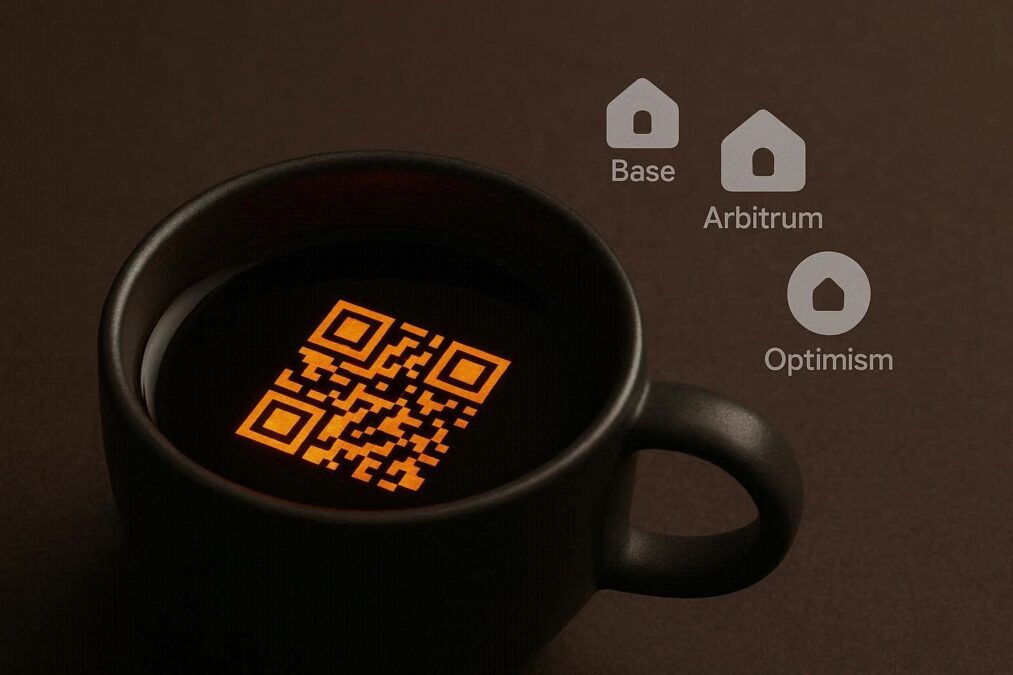
Welcome to the utility belt. For years, the biggest joke in crypto was the “Bitcoin Coffee” problem—the idea that by the time your transaction was confirmed and the fees were paid, your espresso was cold and cost as much as a bottle of fine wine. In 2026, that joke is officially dead, but only if you know where to stand.
If you want to live on the block today, you have to leave the prestigious, expensive “Downtown” of the Ethereum Mainnet and move to the Layer 2 (L2) Suburbs. This is where the real-world economy is actually happening. We’re talking about Base, Arbitrum, and Optimism—networks that inherit the security of Ethereum but charge fees that are finally competitive with a Visa swipe.
The L2 Landscape: Choosing Your Neighborhood
Not all L2s are created equal. In our “Real Life” category, we don’t care about the complex Zero-Knowledge math; we care about where we can actually spend our money.
- Base (The Retail Giant): If you’re a beginner, you’re probably already on Base. Since it’s backed by Coinbase, it has the smoothest “on-ramp” in history. You can move funds from a centralized exchange to a self-custody wallet on Base in seconds for pennies. In 2026, Base has become the go-to for consumer apps. If a store accepts “crypto,” there’s a 90% chance they have a Base address.
- Arbitrum (The DeFi Hub): If you’re a power user who wants to earn yield while you’re not spending, Arbitrum is your home. It’s where the liquidity lives. It’s reliable, fast, and has the most robust ecosystem of “Money Legos.”
- Optimism (The Superchain): Optimism is building a network of interconnected chains. It’s the “public goods” neighborhood—ideal for those who want to support the ecosystem while enjoying sub-cent transaction costs.
How to Pay: The Tech Behind the Counter
Living on L2s in 2026 requires a specific set of tools. You can’t just walk into a shop with a Ledger and hope for the best. You need Account Abstraction (AA).
AA is a fancy term for “Smart Wallets.” These are apps like Coinbase Wallet, Safe, or Rabby that allow for features we take for granted in banking: social recovery (if you lose your keys), gasless transactions (where the merchant pays the fee), and “one-click” payments.
In many cities today, you’ll see QR Code payments. You scan, your wallet pops up a “Base” or “Lightning” prompt, you biometric-verify with your thumbprint, and the transaction is done before the clerk can ask if you want a receipt. No waiting for 12 confirmations. No $40 gas fee. Just a smooth, digital-native experience.
The Stablecoin Standard: USDC is King
Let’s be real: nobody wants to buy bread with a volatile asset like ETH or BTC. If the price of ETH jumps 10% while you’re in the checkout line, you feel like a genius; if it drops, you feel like a loser.
In the Real World Ledger, we use Stablecoins. Specifically, USDC on L2s has become the unofficial currency of the crypto-nomad. It’s regulated, it’s transparent, and on networks like Base or Arbitrum, it moves at the speed of light. Many “Crypto Debit Cards” now allow you to hold a balance in USDC on an L2, avoiding the tax nightmare of “selling” a capital asset every time you buy a sandwich.
The Bitter Reality: The “Bridge” Tax and Fragmentation
Now, for the “Bitter” part. The L2 dream isn’t perfect. We currently live in a world of fragmentation. Your money might be on Arbitrum, but the cool new social app only takes funds on Base.
Moving money between these “suburbs” still requires bridging. While bridges have become faster and cheaper, they are still a point of friction—and a point of risk. We’ve seen enough “Bridge Hacks” to know that the plumbing isn’t fully secure yet. You have to be smart. Don’t keep your entire life savings on a hot wallet on a brand-new L2. Move what you need for the week, and keep the rest in the “Fortress” (Bitcoin) or “Cold Storage.”
Conclusion: The Exit is Practical, Not Just Philosophical
The goal of using L2s for daily payments is to prove that we don’t need the legacy banking system to function in society. When you pay for a meal using a self-custody wallet on Base, you are bypassing the entire predatory apparatus of merchant fees, banking delays, and centralized surveillance.
It’s about Sovereignty in the Small Things. If you can’t buy a coffee without a bank’s permission, you aren’t truly free. But with an L2 wallet in your pocket, you’re carrying a bank, a mint, and a payment processor everywhere you go.
The suburbs are open. The gas is cheap. The coffee is waiting. It’s time to stop hoarding and start participating in the economy we’re trying to build.