
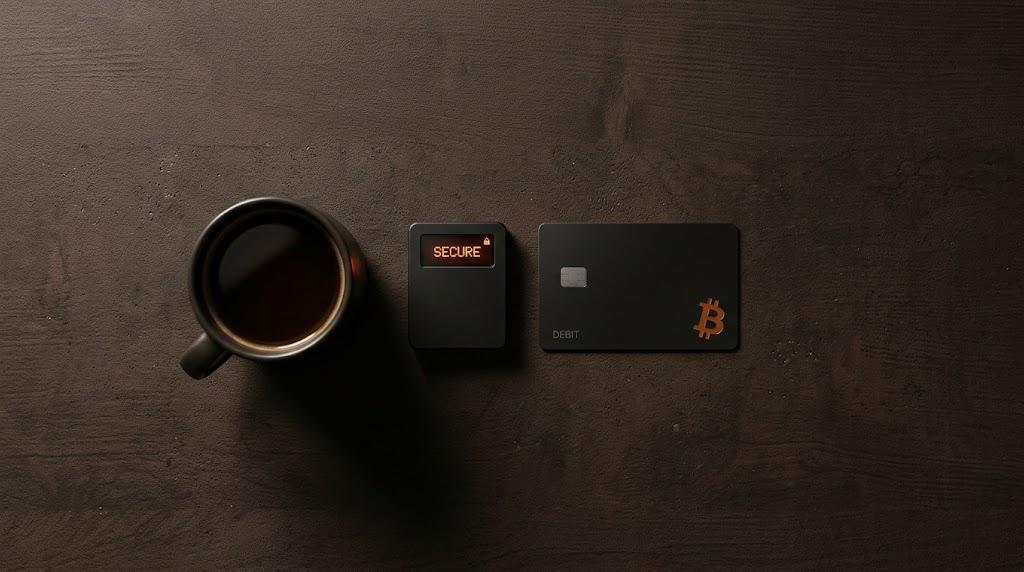
Welcome to the most utilitarian corner of Bitter Crypto. If our first two categories were about the “why” (Bitcoin) and the “how” (DeFi), this category is about the “now.” This is where the rubber meets the road—or more accurately, where the private key meets the Point of Sale terminal.
For years, the mainstream media has mocked crypto as “monopoly money” that you can’t actually use to buy anything. They love to cite the guy who bought two pizzas for 10,000 BTC as a cautionary tale of why you should never spend your coins. We disagree. While we are huge fans of “HODLing” for the long term, a currency that cannot be spent isn’t a currency at all; it’s a collectible. To achieve true financial sovereignty, you need to know how to exit the fiat system not just for investment, but for survival.
The Rise of the Crypto Debit Card
The single most significant bridge created in the last few years is the Crypto Debit Card. For a long time, if you wanted to spend your Bitcoin, you had to send it to an exchange, sell it for fiat, wait three days for a wire transfer to hit your legacy bank, and then swipe your old plastic card. It was a miserable, slow, and often expensive process.
Today, companies like Coinbase, Crypto.com, and BitPay have streamlined this into a seamless experience. These cards allow you to keep your wealth in digital assets until the very second you swipe. The merchant receives the local currency they want, and you get rid of the “satoshis” or “stablecoins” you want to spend.
In this category, we aren’t just going to list these cards; we’re going to tear them apart. We’ll look at the hidden fees, the ATM withdrawal limits, and the cashback rewards (which are often paid in the platform’s own volatile token). We’ll answer the “bitter” questions: Is the convenience worth the tax reporting headache? Which cards actually work when you’re standing in a grocery store in a foreign country?
Traveling on the Block
Travel is perhaps the ultimate “stress test” for crypto utility. Anyone who has ever had their traditional bank account frozen because they tried to buy a train ticket in a “suspicious” country knows the frustration of the legacy system. Your money is yours, but only if the bank’s fraud algorithm says so.
Bitcoin doesn’t care about borders. In the Real-World Ledger, we will share blueprints on how to navigate the globe using crypto. This includes finding hotels that accept direct crypto payments, using services like Bitrefill to buy local gift cards for everything from Uber to Starbucks, and identifying cities like El Zonte or Lugano where Bitcoin is more than just a buzzword—it’s a way of life. Using crypto for travel isn’t just a gimmick; it’s a way to ensure that your ability to move and eat isn’t dependent on a centralized institution’s permission.
The Pillar of Security: Hardware Wallets
You cannot live a “crypto life” without a serious security strategy. If you keep your life savings on a phone app or a centralized exchange, you aren’t living in reality—you’re living on borrowed time.
The Real-World Ledger will provide exhaustive, “explain-it-like-I’m-five” tutorials on hardware wallets. We believe that cold storage is the non-negotiable entry fee for this revolution. We’ll compare the industry giants, looking at “Air-Gapped” systems versus USB connections, and discuss the physical security of your “seed phrase.” Because in the real world, “losing your password” doesn’t mean clicking a link; it means losing your wealth.
Privacy as a Utility
Finally, we have to talk about the “bitter” side of transparency. Every transaction on a public blockchain is there for the world to see. If you pay for a coffee with a public address, a savvy barista could technically see your entire balance. That’s not a bug; it’s a feature of the blockchain, but it’s a nightmare for personal safety.
In this category, we will explore privacy tools. We’ll talk about “CoinJoins,” using the Lightning Network for smaller, faster, and more private daily transactions, and how to manage your “UTXOs” so you aren’t broadcasting your net worth every time you buy a pack of gum. Privacy isn’t about having something to hide; it’s about having something to protect.
The Mission
The goal of Crypto in Real Life is to turn you into a self-sovereign individual who can navigate the physical world without a traditional bank as a chaperone. We want to solve the problems that actually keep you from using your crypto:
- “How do I pay my rent with USDC?”
- “What’s the safest way to carry my crypto through an airport?”
- “Which hardware wallet is actually waterproof?”
This isn’t about the philosophy of 21 million or the complex math of a liquidity pool. This is about the utility belt. We’re going to give you the reviews, the tutorials, and the hard truths about what works and what’s just marketing fluff.
If you want to move beyond being a spectator in the crypto market and start being a participant in the crypto economy, this is your home base. Grab your card, secure your keys, and let’s go spend some “magic internet money” in the real world.